

Persephone
the priestess of the deepest rite

flowers and fires
a haiku collection
she is in the seeds
she dances in the rise and fall
flower queen of hell
narcissus now cries
for you are gone with spring
but you will return
adorned in gold
draped in pomegranate red
fire and flowers bloom
The myth of Persephone
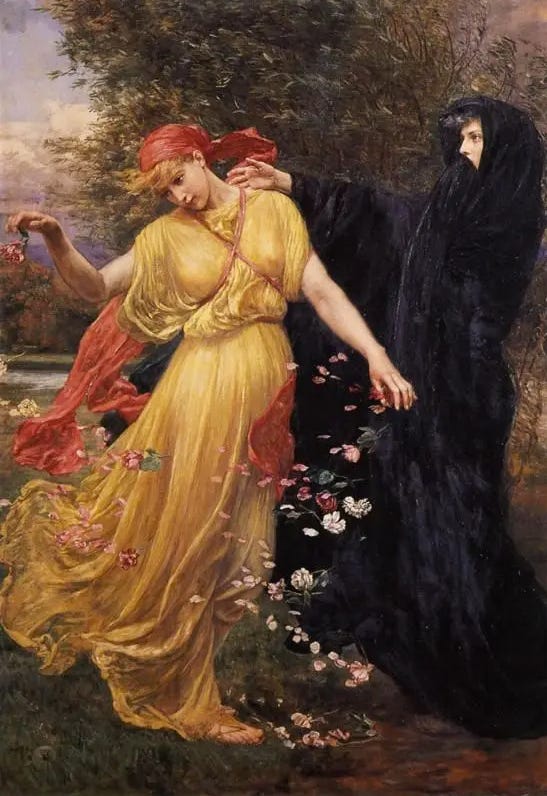
Persephone (Περσεφόνη), daughter of Demeter (Δημήτηρ), goddess of the harvest, and Zeus (Ζεύς), king of the gods, was born under the bright skies and green fields of Earth. She was known as Kore (Κόρη), the Maiden, innocent, pure, untouched by sorrow. She danced in the meadows, her footsteps leaving the earth rich and fertile, and her laughter echoed through the glades where wildflowers bloomed. Her world was one of sunlight, joy, and the promise of endless spring.
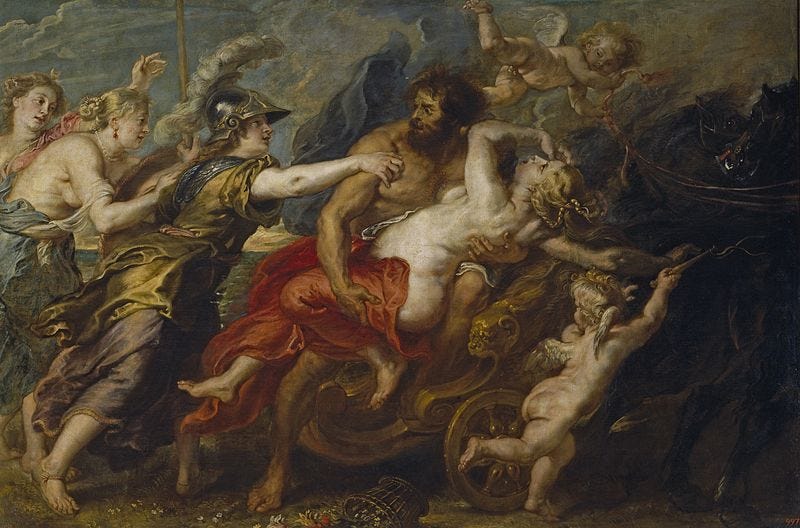
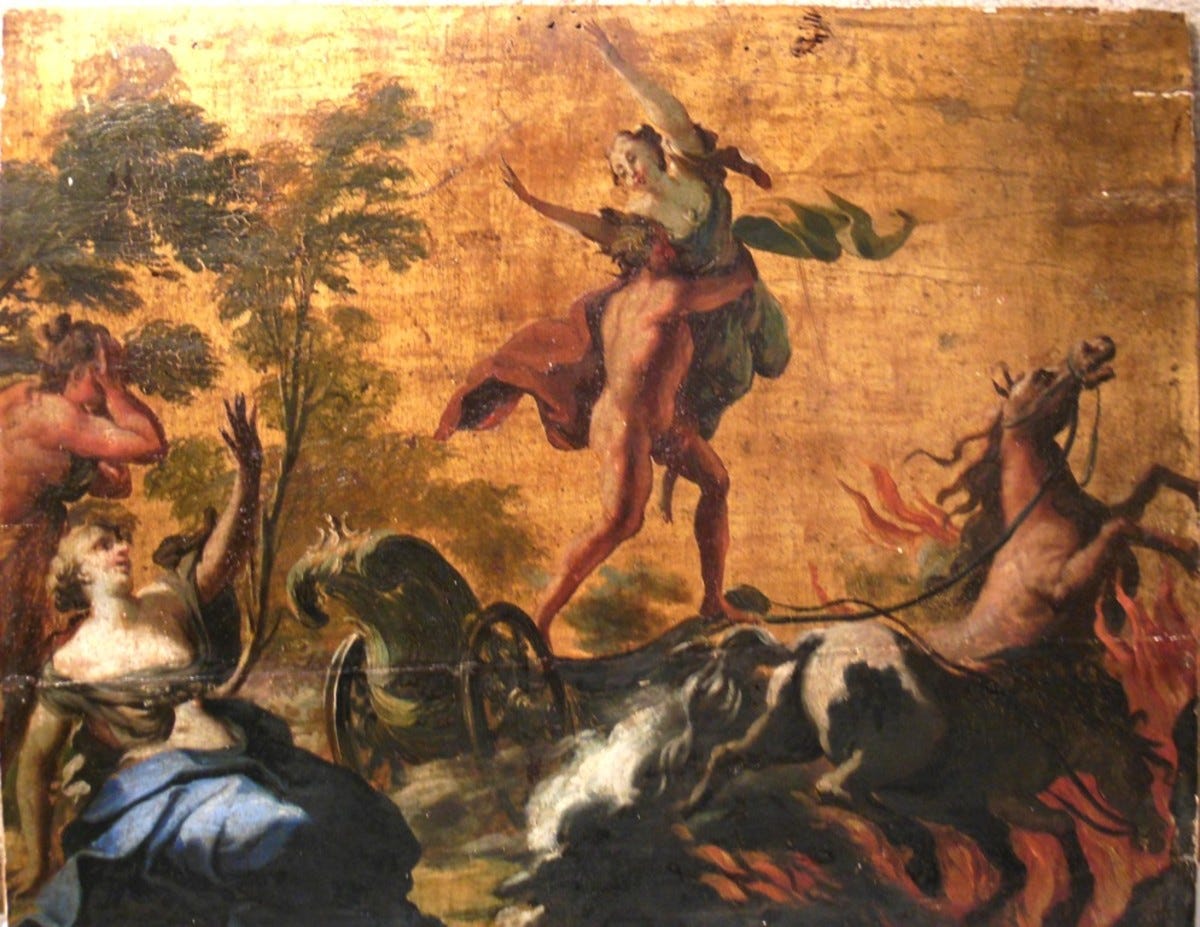
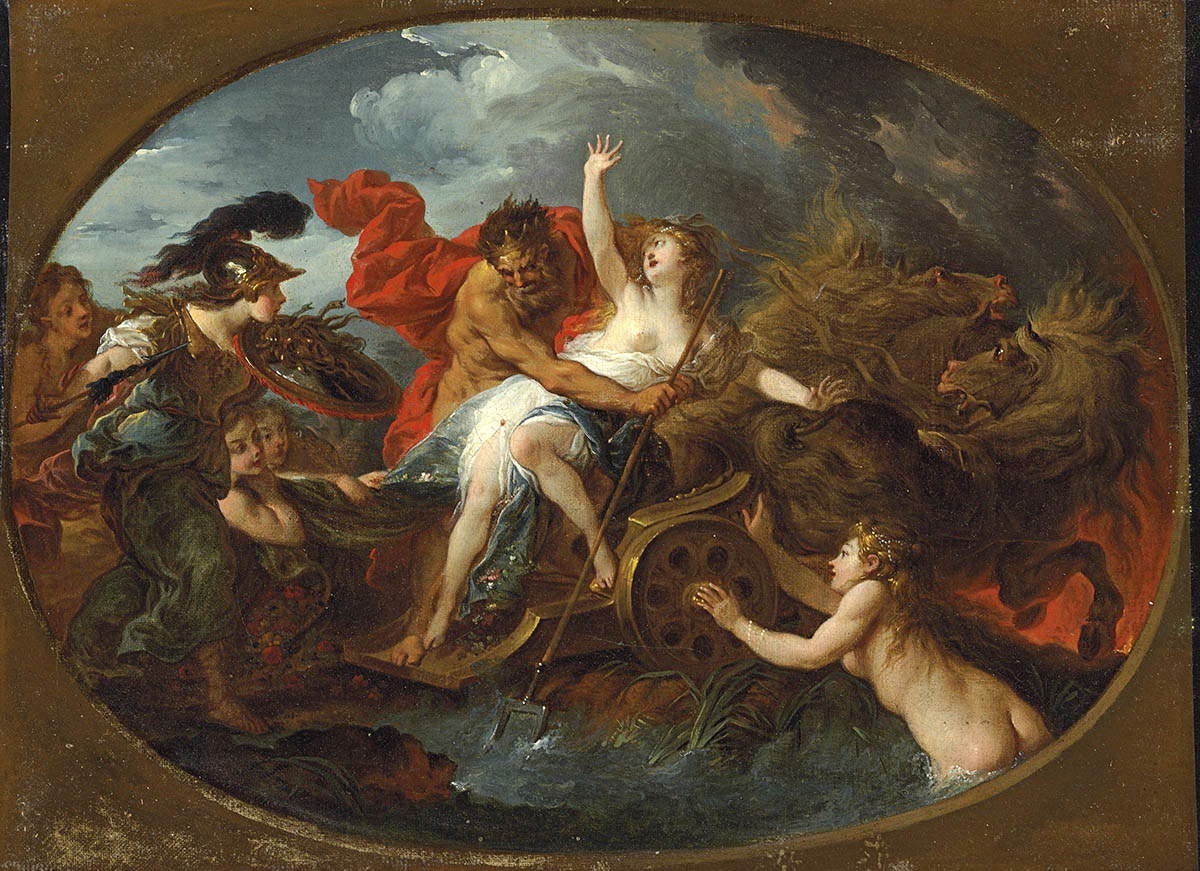
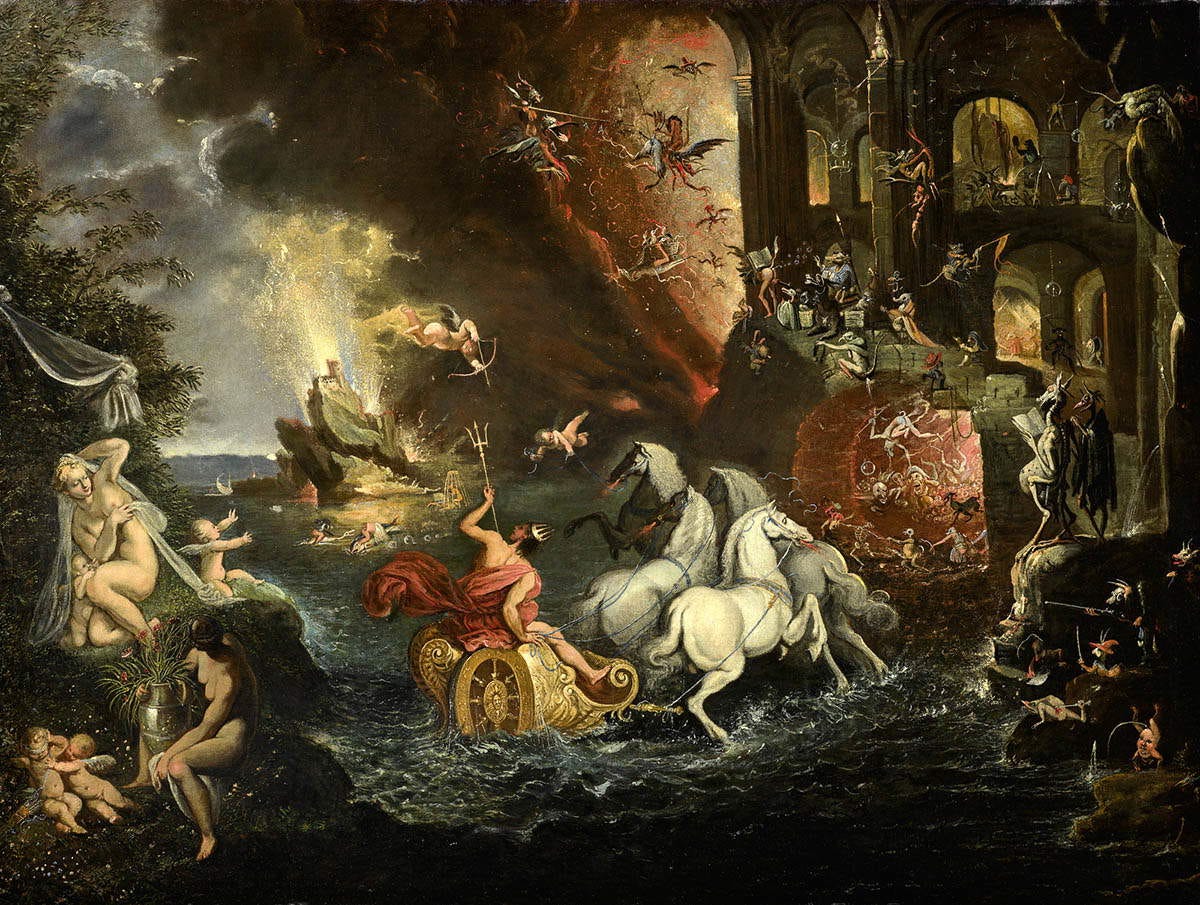
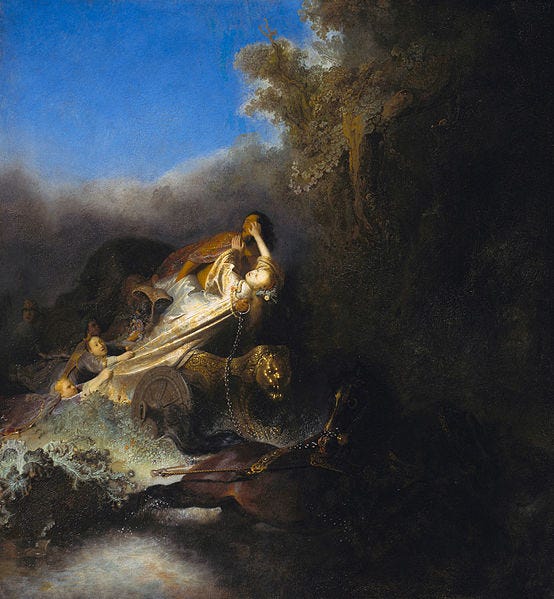
One day, as Kore wandered alone in a field, plucking a narcissus flower, a symbol of her untainted innocence, the earth beneath her cracked open. From the chasm, Hades (ᾍδης), the god of the underworld, emerged in his dark chariot, drawn by fiery horses. Some versions of the story say that Gaia (Γαῖα), the Earth itself, had conspired to send her down into the depths, for even the Earth knew the power of Persephone’s spirit and the balance she would bring to all worlds. Others claim it was Hades’ desire alone that made him seek to claim his young niece as his bride.
In an instant, Persephone was pulled into the underworld (Ἀδὴς), her screams unheard by those above. Hecate (Ἑκάτη), the goddess of magic and the crossroads, and Helios (Ἥλιος), the ever-watching Sun, were the only ones who saw her abduction. Demeter, when she realized her daughter was missing, was stricken with grief, and the world began to wither. Crops failed, animals starved, and the earth herself mourned the loss of the goddess of fertility.
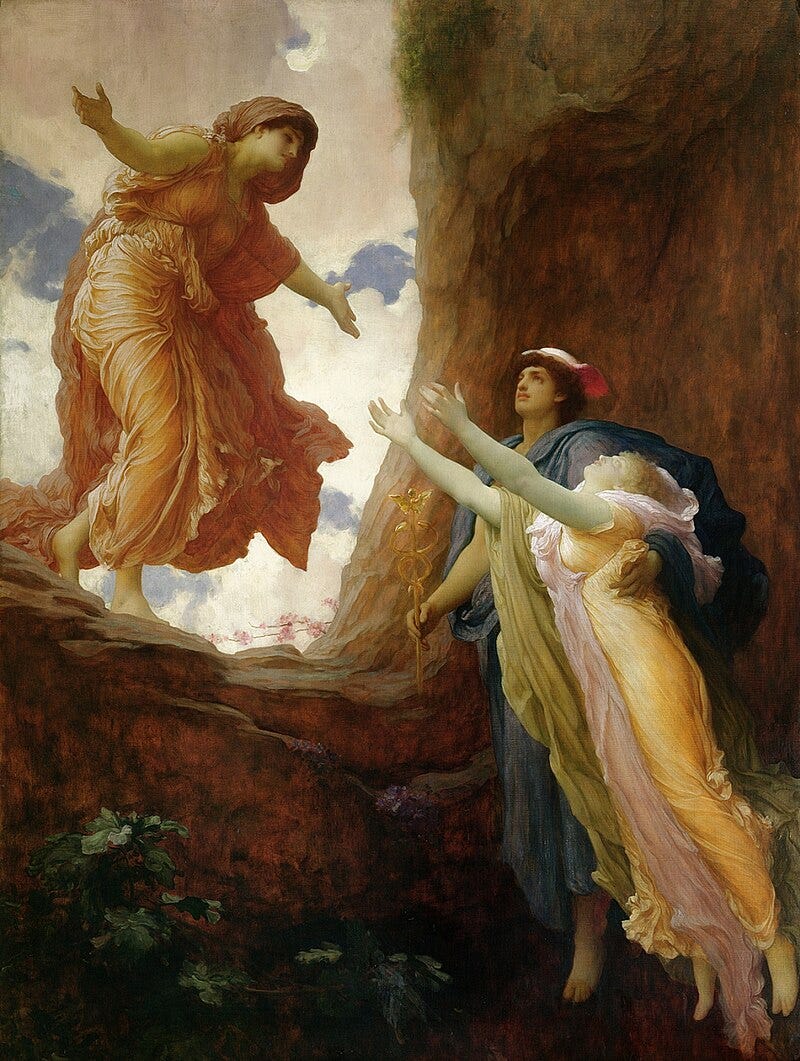
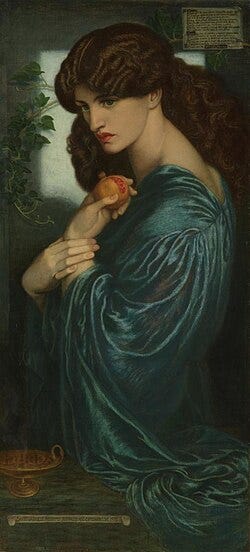
In her despair, Demeter searched the earth, taking on a mortal guise, and wandered through the lands looking for her daughter. She would not allow the earth to bear fruit again until her child was returned. Eventually, the gods took notice of her mourning. Zeus intervened, sending Hermes (Ἑρμῆς) to the underworld to retrieve Persephone. Yet, the Fates had already woven their plans for her life. Before she was freed, Persephone had eaten six seeds from the pomegranate, a fruit that bound her to the underworld for part of every year.
Thus, the arrangement was made: Persephone would return to her mother for six months, bringing spring and rebirth to the world, and she would remain in the underworld for the other six, where she would reign as Queen of the Dead.
In some versions of the myth, Persephone’s descent was not a forced abduction but a conscious choice, a choice to embrace the underworld and rule alongside Hades, where she would wield power and wisdom in her own terms. However, given the patriarchal context of Ancient Greek mythology, where female figures were often subject to the will of gods and men, it’s unlikely this was the original intent.
This myth, in all its versions, is a story of transformation and balance. Persephone’s life is marked by her transition from innocence to maturity, from light to darkness, from maiden to queen, from surface to depth. She is the embodiment of rebirth and the ever-turning cycle of the seasons. She teaches that both life and death must coexist, for only through the balance of these forces can true growth occur.
The Eleusinian mysteries and her divine role
The Eleusinian Mysteries, celebrated at Eleusis, were rites that honored both Persephone and Demeter. Initiates into these mysteries learned about the cycles of nature and the eternal journey of the soul. Persephone, as queen of the underworld, was not only a figure of death, but of the wisdom that death brings, a wisdom that can transform the living.
The pomegranate that Persephone ate symbolizes, in this context, knowledge, a knowledge that cannot be unlearned once it is taken in. It is the knowledge of both sides of existence, the bright and the dark. It is the knowledge that our lives are inextricably linked to the cycles of growth and decay.
The pomegranate
In many interpretations of the myth, the pomegranate serves as a powerful symbol of sex and sexual awakening. Its rich red color, juicy interior, and abundance of seeds have long been associated with femininity, fertility, and sensuality. When Persephone eats the fruit, it marks a transformative moment, a symbolic loss of innocence and transition from maiden (Kore) to Queen of the Underworld. This act can be seen as her sexual initiation, where she moves from the world of childhood into adult womanhood. The Underworld itself often represents the unconscious or hidden aspects of desire, and by consuming the pomegranate, Persephone is not simply a passive victim but an active participant in her own transformation. In this reading, the pomegranate becomes not just a fruit, but a metaphor for awakening, desire, and the complex interplay between innocence, power, and sexuality.
What Persephone teaches us
She is the voice of transformation.
Kore walks through death, not to stay broken,
but to come back crowned. She is the cracked seed that becomes a tree.
She embraces contradiction.
Persephone is maiden and monarch,
light and dusk, bloom and decay.
She teaches us: it’s okay to be both.
She rules the in-between.
Like twilight, she lives where day and night kiss.
She’s with those in grief, in transition,
in silence, in change.
She reminds us: rebirth is not weakness, it's power.
She calls us to our becoming.
We all must descend.
But we all can return, transformed, self-made.
The world within us is wide enough
to hold both flowers and fire.
Practices inspired by Persephone:
🌀eating fresh pomegranates, berries, or honeyed fruits
🌀tending to a personal garden or houseplants
🌀collecting wildflowers and pressing them in journals
🌀wearing floral perfumes or anointing with rose and jasmine oils
🌀sun salutations
🌀nighttime meditation
🌀drinking black currant herbal tea
🌀honoring your ancestors through storytelling
🌀sitting quietly in a candlelit room, thinking
🌀wearing your favorite black dress
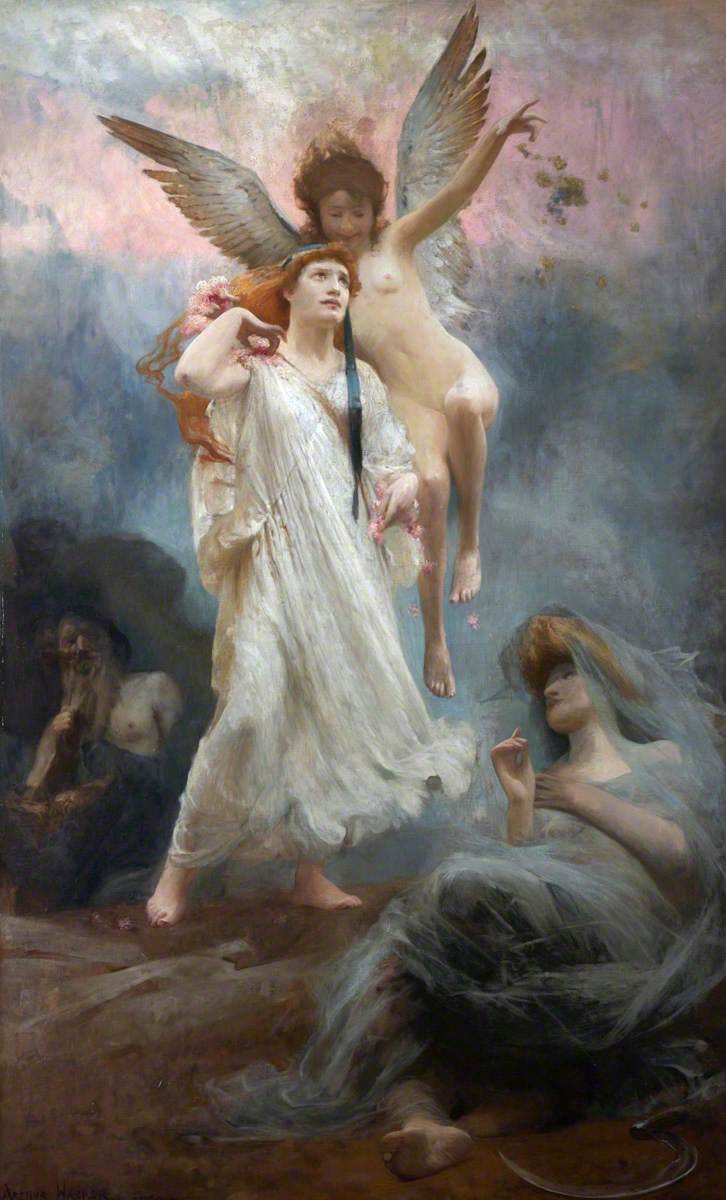
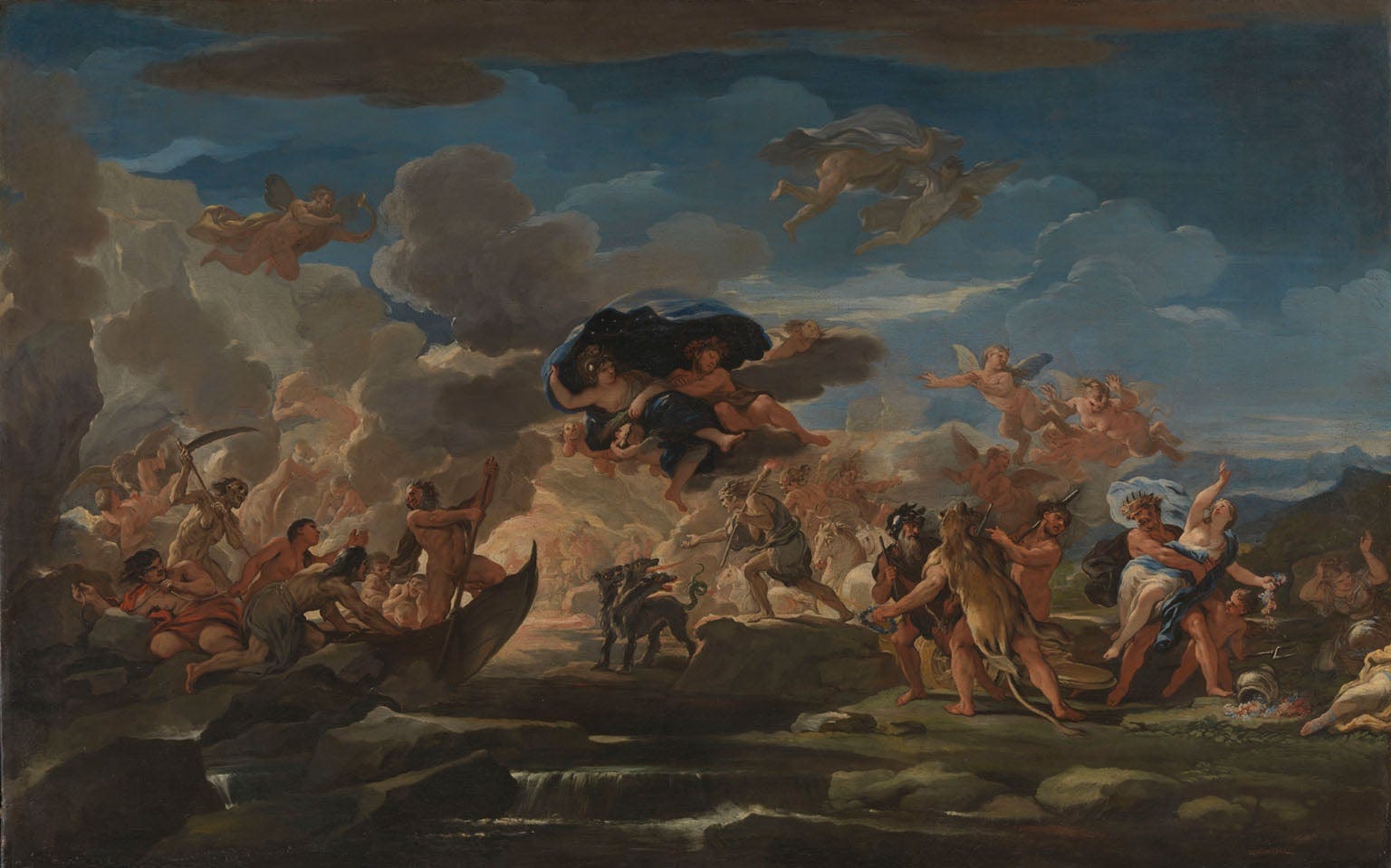
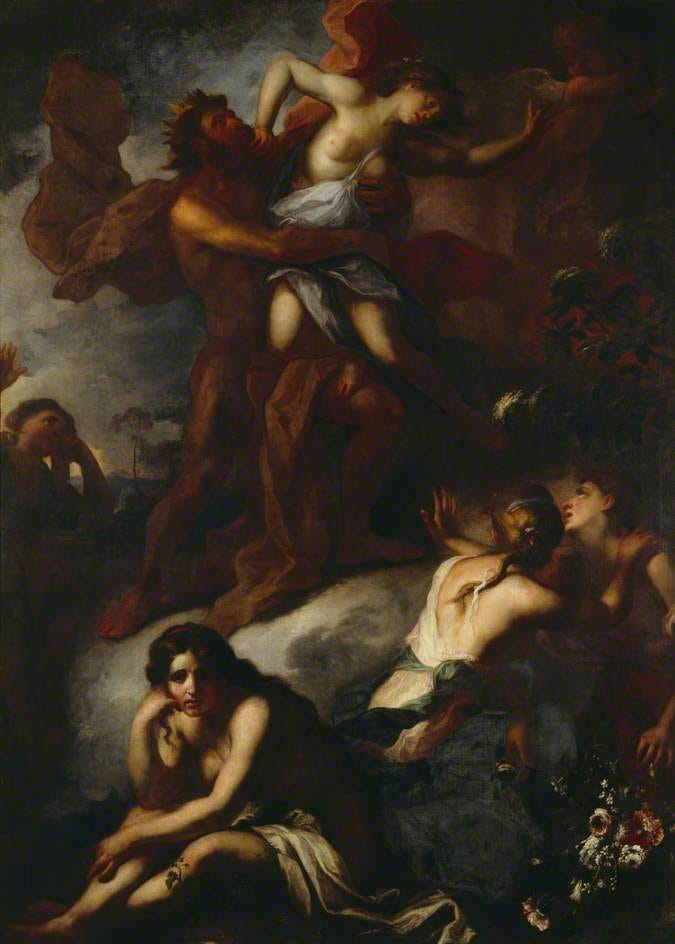
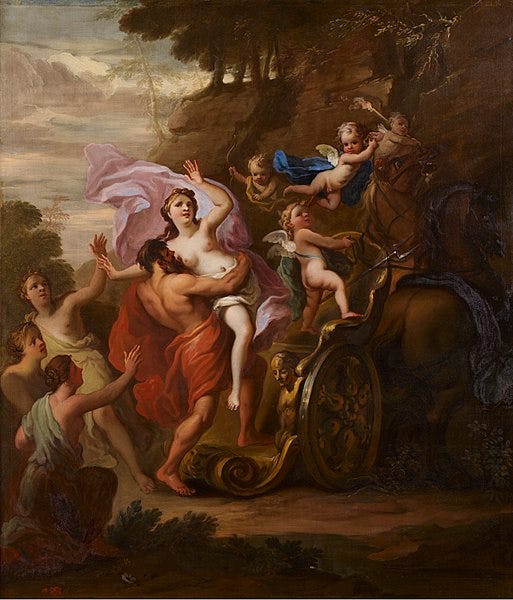
Enjoy some (okay, a lot) art:
![‘The Fate of Persephone’ – Walter Crane [Public domain]](https://substackcdn.com/image/fetch/$s_!ym1f!,f_auto,q_auto:good,fl_progressive:steep/https%3A%2F%2Fsubstack-post-media.s3.amazonaws.com%2Fpublic%2Fimages%2F58d164c6-4b06-4d97-be0b-f5ef66c10c33_1924x827.jpeg "‘The Fate of Persephone’ – Walter Crane [Public domain]")
Wow! I should be getting to bed but I’m glad I read this as my late night fairytale. This was beautiful, your haiku, your retelling of one of my favorite myths and I also loved that deeper cyclical connection of death and rebirth. On a silly side note, they should make a pomegranate emoji!
This is one of my favourites of yours Nadia! This is so well written and detailed and beautifully executed! I enjoyed it so much thank you xx